When you’re trying to squeeze every last drop of precision out of a rotary or linear encoder, choosing the right fuente de luz de codificador óptico is probably the most critical decision you will make. Honestly, many hardware designers spend weeks obsessing over the photodiode array layout or the grating pitch of the glass disc, only to realize too late that their chosen fuente de luz de codificador óptico is completely bottlenecking the system.
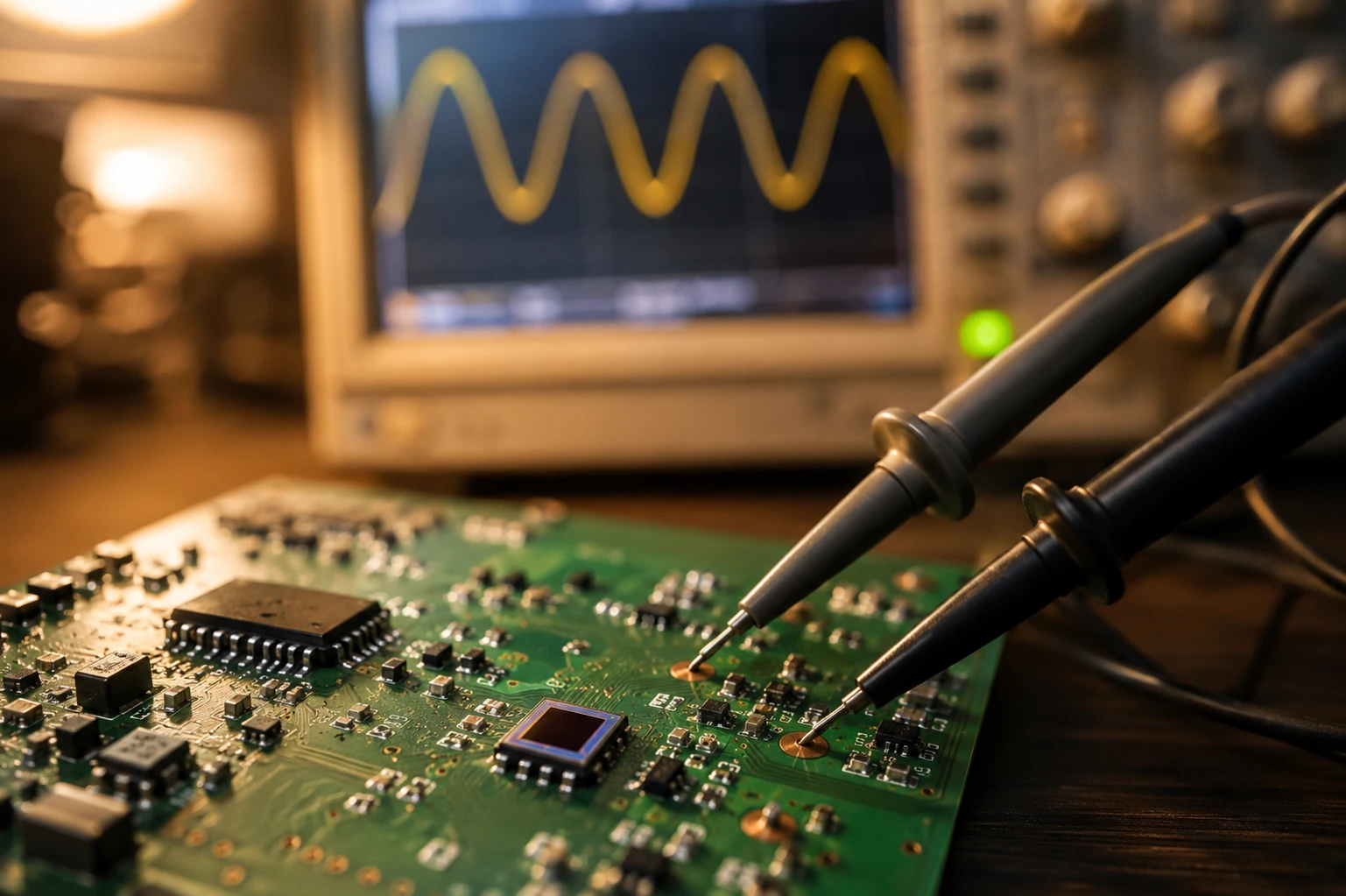
If you’ve ever looked at an oscilloscope and seen a fuzzy, degraded sine wave coming off your photoreceiver, you know exactly what I’m talking about. A sloppy beam of light ruins signal clarity faster than you can say “crosstalk.” That’s where selecting a high-precision fuente de luz de codificador óptico with a tight 4-degree beam angle changes the game.
In this guide, we’ll look closely at why your choice of fuente de luz de codificador óptico dictates the upper limit of resolution. We will explore the optical physics, do some quick math on light scattering, and explain how to pick the right fuente de luz de codificador óptico so your sensors can deliver the sub-micron accuracy your customers demand.
The Core Challenge: Light Scattering in Optical Encoders
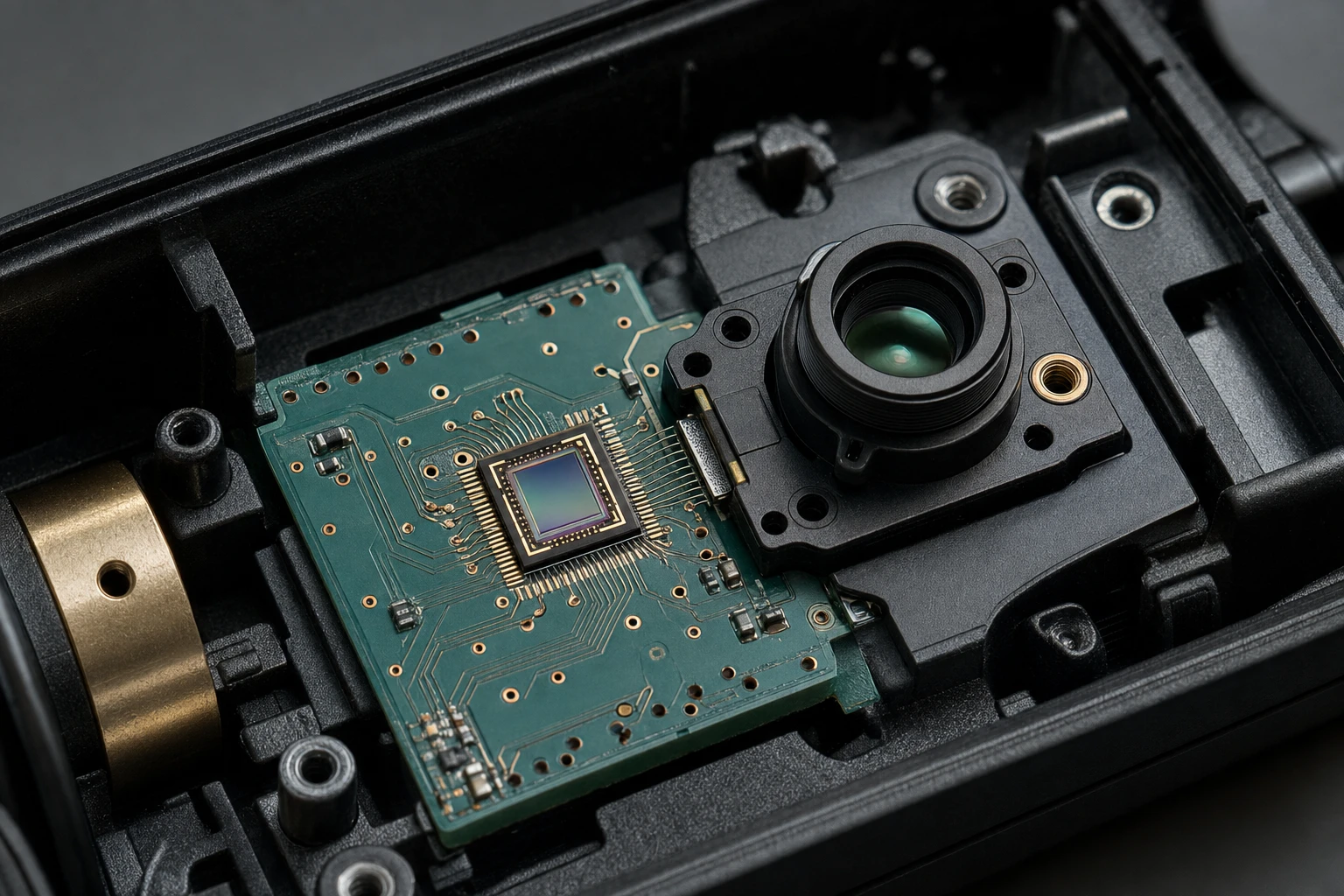
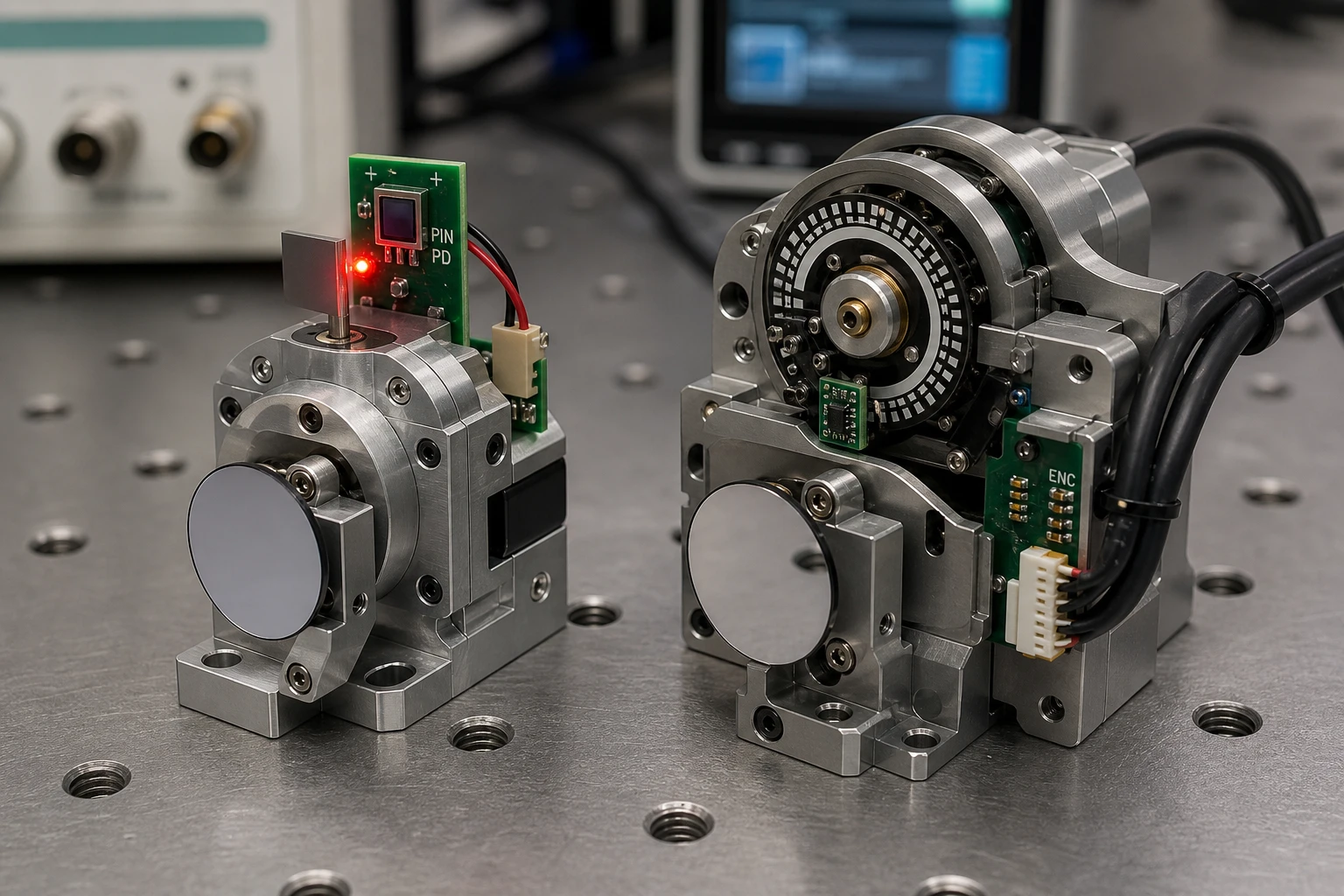
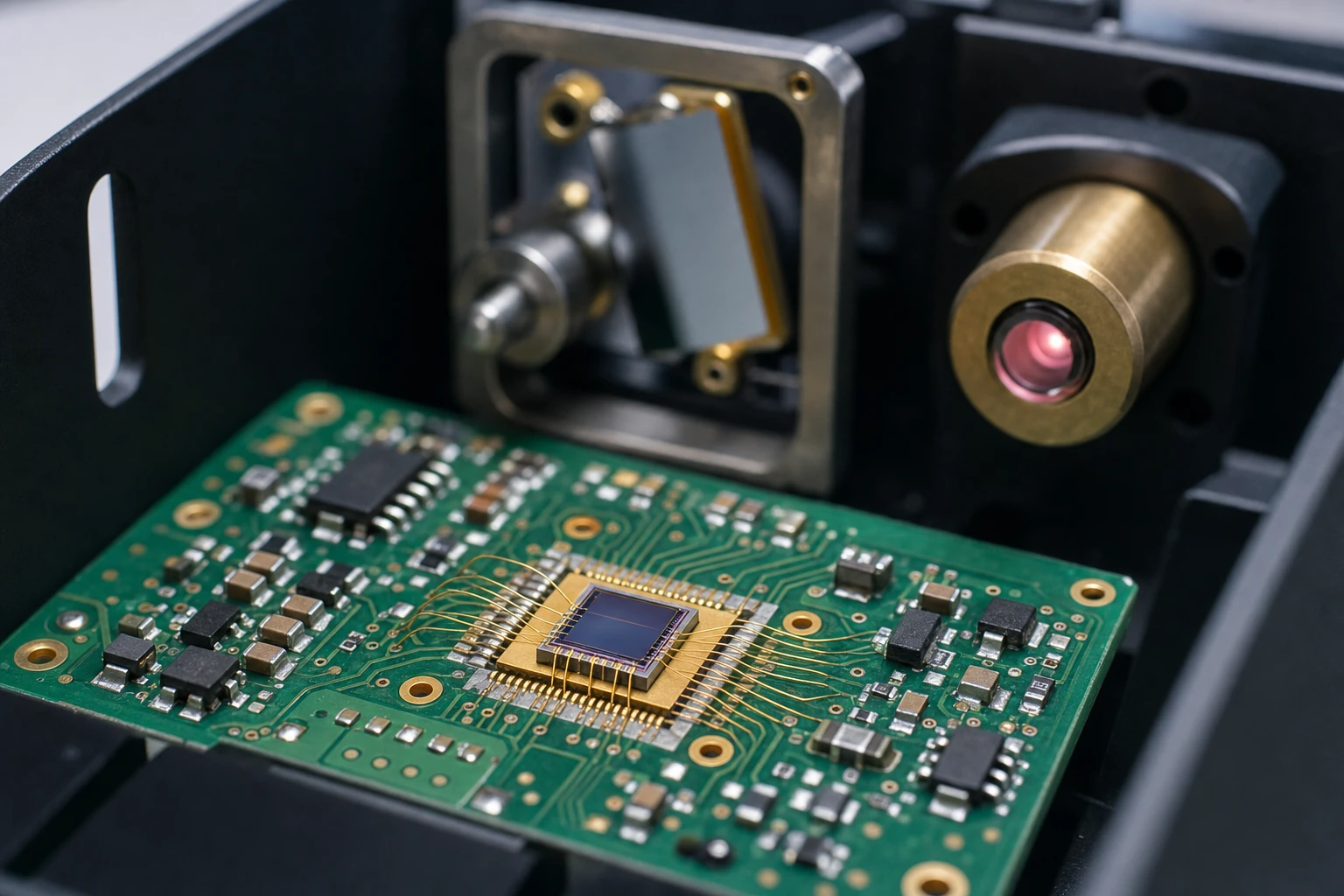
Why does beam angle even matter so much? To answer that, we have to look at how transmissive and reflective encoders work. In a typical setup, your fuente de luz de codificador óptico projects light through a rotating code wheel (often made of glass, metal, or plastic) with fine slits. On the other side, a photodetector array receives this light and converts the optical patterns into electrical signals.
As encoder manufacturers push for higher resolution—think 2500 Lines Per Inch (LPI) or even higher—the physical slits on the disc must become incredibly narrow. If you use a generic, wide-angle LED as your fuente de luz de codificador óptico, the light spreads out like a flashlight in the fog. This divergence causes the light passing through one slit to spill over into the adjacent slits. In the optics world, we call this optical crosstalk or signal blur.
When you use a poorly matched fuente de luz de codificador óptico, the photodiode array receives a muddy, low-contrast pattern instead of sharp, distinct shadows. Your digital interpolation circuits start guessing, which leads to phase errors, jitter, and ultimately, a loss of positioning accuracy. Compared to standard wide-angle LEDs, an optimized fuente de luz de codificador óptico like a LED con un ángulo de haz de 4 grados makes a massive difference.
What is a 4-Degree Narrow Beam LED?
To combat light scattering, many engineers are turning to a specialized LED for high-resolution encoders. Specifically, a LED con un ángulo de haz de 4 grados behaves more like a semiconductor laser than a traditional LED, but without the high cost, temperature sensitivity, or eye-safety headaches of a laser diode.
A LED de haz enfocado con un ángulo de haz de 4 grados, utiliza un empaquetado especializado de micro-domo o tecnología de emisor de fuente puntual. En lugar de dispersar la luz en un cono de 30 o 60 grados, la óptica interna moldea la luz en un haz paralelo y altamente colimado.
Cuando este especializado fuente de luz de codificador óptico se activa, los rayos permanecen casi paralelos a lo largo de la distancia crítica entre la fuente de luz, el disco de código y el detector. Al mantener el haz estrechamente enfocado, se elimina virtualmente la dispersión espacial que causa la diafonía (crosstalk). Esto permite que su matriz de fotodiodos capture transiciones limpias y de alto contraste, incluso cuando el paso de la rejilla es extremadamente estrecho.
Let’s do some simple math to illustrate this. If you are designing with a typical air gap (the physical distance between your fuente de luz de codificador óptico y la matriz del fotodetector), se puede calcular el círculo de desenfoque físico en el detector.
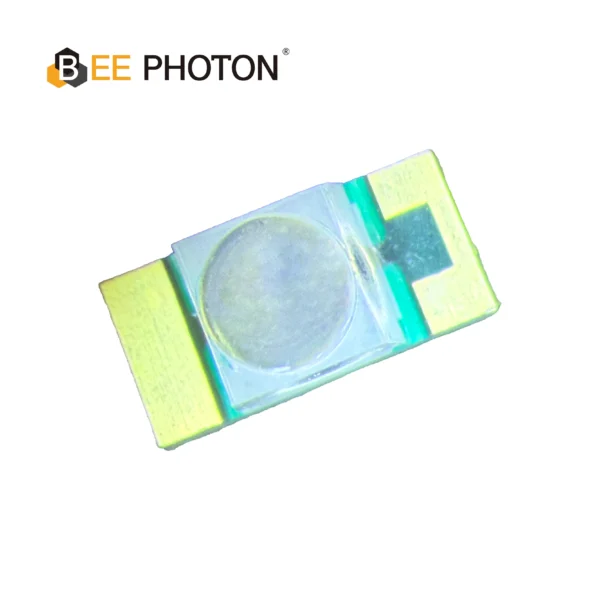
LED NIR E850-25-001-L20
El E850-25-001-L20 es un equipo de alto rendimiento LED NIR de 855 nm diseñado para aplicaciones industriales exigentes. Fabricado por Bee Photon, este emisor de infrarrojos presenta un estrecho ángulo de emisión de 20 grados, que proporciona una alta intensidad radiante de 25 mW/sr adaptada a la detección de precisión. Su robusto diseño garantiza una alta fiabilidad y un rendimiento constante en un amplio rango de temperaturas de funcionamiento.
Las matemáticas detrás de la divergencia del haz y el desenfoque de la señal
Para simplificar y evitar el formato LaTeX complejo que podría dañar su editor de WordPress, escribamos la fórmula básica para la dispersión del haz utilizando símbolos de texto estándar.
Let w sea el diámetro del punto de luz en el detector, w0 sea el tamaño de la apertura de emisión inicial de su fuente de luz de codificador óptico, z sea la distancia o el entrehierro desde la lente del LED hasta el detector, y theta sea el ángulo de divergencia total del haz del LED.
La fórmula para el diámetro del punto de luz w en su detector se puede expresar como:
w = w0 + 2 * z * tan(theta / 2)
Let’s run a quick calculation comparing a standard LED to a specialized fuente de luz de codificador óptico de BeePhoton.
Supongamos que tenemos un entrehierro z of exactly 1.5 millimeters, which is pretty standard in compact industrial motor drives. Let’s assume the initial emitter aperture w0 es de 150 micrómetros (lo que equivale a 0,15 mm).
Caso A: Un LED estándar de 30 grados utilizado como un fuente de luz de codificador óptico.
Toma, theta es de 30 grados, por lo que theta / 2 es de 15 grados.tan(15 grados) = 0,2679w = 0.15 + 2 * 1.5 * 0.2679w = 0.15 + 0.8037w = 0.9537 mm
El haz de luz de este estándar fuente de luz de codificador óptico se ha expandido de 0,15 mm a casi 1 milímetro para cuando llega al detector. Si su disco codificador tiene ranuras de solo 20 micrómetros de ancho, este punto de luz masivo y divergente cubrirá varias ranuras al mismo tiempo, lo que hará imposible una retroalimentación de alta resolución.
Caso B: Un haz especializado de 4 grados fuente de luz de codificador óptico.
Toma, theta es de 4 grados, por lo que theta / 2 es de 2 grados.tan(2 grados) = 0,0349w = 0.15 + 2 * 1.5 * 0.0349w = 0.15 + 0.1047w = 0.2547 mm
Observe esa diferencia. Con un LED con un ángulo de haz de 4 grados, el punto de luz tiene solo 0,25 mm de ancho, casi cuatro veces más pequeño que el LED estándar. Los rayos de luz son prácticamente paralelos. Esto asegura que la sombra proyectada por el disco de código sobre su fotorreceptor sea increíblemente nítida, lo que le permite utilizar un espaciado de ranuras mucho más estrecho en su rueda de código. Es por esto que un preciso fuente de luz de codificador óptico is required if you want to push your encoder’s resolution into the thousands of Counts Per Revolution (CPR).
Por qué un ángulo de haz de 4 grados es el punto óptimo
You might wonder: “Why not go even tighter? Why not use a 1-degree beam or a laser?” Well, there are a few practical reasons why a 4-degree fuente de luz de codificador óptico es considerado el punto óptimo por la mayoría de los ingenieros de diseño de sensores B2B.
En primer lugar, a medida que se intenta reducir el ángulo del haz por debajo de los 4 grados utilizando lentes ópticas estándar, las tolerancias de alineación se vuelven increíblemente estrictas. Un haz de 1 grado requiere una colocación mecánica extremadamente precisa durante la fabricación. Si su máquina de montaje (pick-and-place) se desvía solo una fracción de milímetro, o si la carcasa del codificador se expande ligeramente debido al calor del motor, el haz de luz perderá por completo la matriz de fotodiodos. Un LED con un ángulo de haz de 4 grados le ofrece el equilibrio perfecto entre una colimación estrecha y tolerancias de montaje realistas.
En segundo lugar, los diodos láser suelen ser excesivos. Aunque un láser proporciona un haz paralelo y altamente coherente, también introduce ruido óptico como el moteado láser. Además, los láseres son notoriamente sensibles a las altas temperaturas, un problema común dentro de los servomotores industriales calientes. Un dispositivo basado en LED fuente de luz de codificador óptico es mucho más estable térmicamente y tiene una vida útil operativa significativamente más larga, superando a menudo las 100.000 horas de funcionamiento continuo.
Si observa las opciones especializadas en nuestra categoría de productos de fuentes de luz, you’ll find that these narrow-beam devices is engineered specifically to handle the rugged environments of industrial automation while maintaining a tight, reliable beam shape over their entire lifespan.
Comparativa técnica directa de fuentes de luz
To help you visualize the trade-offs, let’s compare different types of fuente de luz de codificador óptico opciones comparadas entre sí. Como desarrollador de hardware o gerente de adquisiciones, debe sopesar el rendimiento frente al costo y la confiabilidad.
Aquí tiene una tabla comparativa sencilla que detalla cómo un dispositivo especializado de 4 grados fuente de luz de codificador óptico se compara con los LED estándar y los diodos láser:
| Parámetro | LED estándar | LED de haz estrecho de 4 grados | Diodo láser (VCSEL) |
|---|---|---|---|
| Ángulo del haz (divergencia) | 30 a 60 grados | ~4 grados (altamente colimado) | < 1 a 2 grados |
| Riesgo de diafonía | Alto (solapamiento de señal frecuente) | Extremadamente bajo | Mínimo |
| Tolerancia de alineación mecánica | Alta (muy permisiva) | Moderada (muy manejable) | Muy baja (poco permisiva) |
| Thermal Sensitivity | Bajo | Bajo | High (requires compensation) |
| Lifespan (MTBF) | High (>100,000 hrs) | High (>100,000 hrs) | Moderate (20,000 to 50,000 hrs) |
| System Cost | Muy bajo | Low to Moderate | Alta |
| Mejor aplicación | Low-res indicators, basic switches | High-resolution optical encoders | Interferential / ultra-precision |
As you can see from this breakdown under the column of fuente de luz de codificador óptico lifespan, thermal sensitivity, and overall alignment tolerance, a specialized fuente de luz de codificador óptico like a LED de haz enfocado offers the reliability of a standard LED, while matching the optical performance of a laser diode for most high-resolution rotary and linear encoder designs.
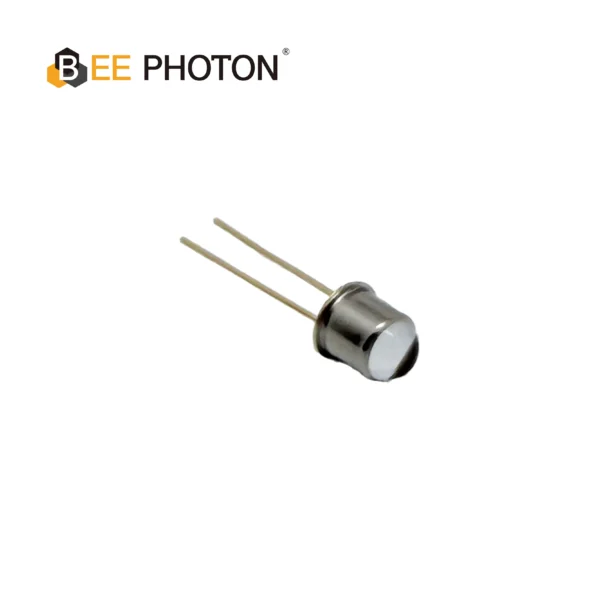
LED NIR E850-180-201L4
En E850-180-201L4 es un sistema de alto rendimiento LED NIR de 850 nm diseñados para la detección industrial de precisión. Fabricado por Fotón abeja, este emisor de infrarrojos está diseñado para ofrecer una gran luminosidad y una estabilidad excepcional, lo que lo convierte en la fuente de luz ideal para entornos de automatización exigentes.
Real-World Engineering Success Story
Let’s talk about a real scenario we encountered. We worked with a manufacturer of high-precision robotic joints who was trying to upgrade their absolute rotary encoders from 12-bit to 18-bit resolution. They kept getting strange signal distortion whenever the ambient temperature inside the robotic arm climbed past 50 degrees Celsius.
Initially, they were using a generic point-source LED as their fuente de luz de codificador óptico. While it worked okay on the lab bench at room temperature, the wider beam divergence and thermal drift of the generic fuente de luz de codificador óptico caused the output signal contrast to drop by over 30%. This drop triggered position-reporting errors, which caused the robotic arm to jitter during precise micro-positioning tasks.
Our engineering team suggested swapping their generic emitter with a high-reliability, custom-lens 4-degree fuente de luz de codificador óptico from BeePhoton. Because the 4-degree narrow beam LED mantuvieron la luz altamente paralela, el contraste de la señal se mantuvo nítido y estable incluso con los cambios en la temperatura de funcionamiento. El nuevo fuente de luz de codificador óptico solucionó instantáneamente la diafonía entre las finas pistas absolutas del disco de vidrio. El fabricante logró con éxito su objetivo de resolución de 18 bits sin cambiar la disposición de su fotodetector ni rediseñar toda su carcasa. Ese es el poder de seleccionar la adecuada fuente de luz de codificador óptico para el trabajo.
Cómo seleccionar la fuente de luz ideal para un codificador óptico
When you’re sourcing an fuente de luz de codificador óptico for a B2B product line, you can’t just pick any random part off a distributor’s shelf. You need to keep several key specifications in mind:
1. Adaptación de la longitud de onda
Su fuente de luz de codificador óptico debe alinearse perfectamente con la sensibilidad máxima de su fotodiodo o CI fotográfico. Normalmente, las longitudes de onda infrarrojas de unos 850 nm o 870 nm son ideales porque los fotodetectores de silicio tienen una excelente eficiencia cuántica en este rango. Para resoluciones ultrafinas, algunos ingenieros optan por longitudes de onda visibles azules o verdes para minimizar los límites de difracción.
2. Potencia de salida óptica (intensidad)
En fuente de luz de codificador óptico necesita proporcionar suficiente intensidad radiante para que la matriz de fotodiodos pueda generar una señal fuerte, pero no tanta como para saturar el receptor. Un altamente eficiente LED de haz enfocado garantiza que obtenga la máxima concentración de luz en el área activa del sensor sin necesidad de consumir altas corrientes de accionamiento.
3. Empaquetado y calidad de la lente
El encapsulado físico de su fuente de luz de codificador óptico dicta cómo se monta en su PCB. Los encapsulados de tipo lata metálica (como TO-18 o TO-46) con lentes de cúpula de vidrio selladas herméticamente ofrecen una claridad óptica y protección física increíbles en entornos industriales exigentes. Para diseños ultracompactos, también son populares los encapsulados especializados de montaje superficial (SMD) con micro-lentes integradas.
Al centrarse en estos parámetros, se asegura de que su seleccionado fuente de luz de codificador óptico coincida tanto con las limitaciones físicas como eléctricas del ensamblaje de su codificador, allanando el camino para un proceso de fabricación fluido.
Si actualmente está evaluando sus opciones, puede consultar nuestra amplia variedad de emisores de grado industrial en BeePhoton categoría de productos de fuentes de luz page. We’ve worked hard to optimize these components specifically for demanding motion control applications.
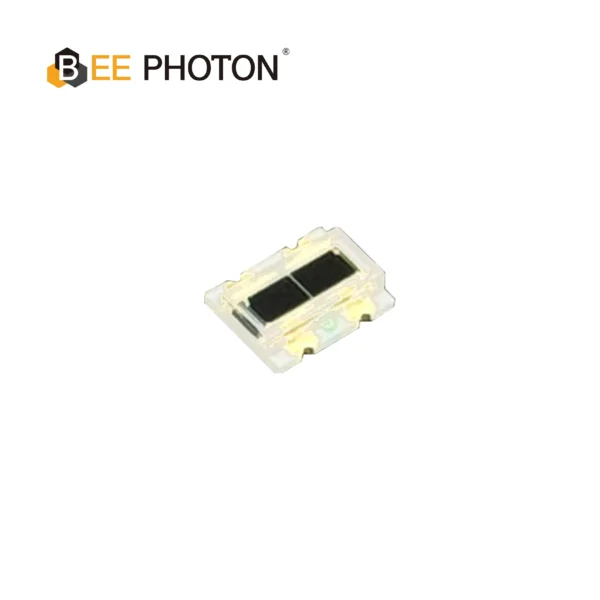
Matriz de fotodiodos PIN de Si PDCA02-102
En PDCA02-102 es un sistema de alto rendimiento Fotodiodo PIN de Si diseñado para sistemas ópticos de medición y alineación de precisión. Diseñado por Bee Photon, este Fotodiodo de 2 segmentos ofrece una amplia gama de respuesta espectral 400nm a 1100nm, que cubre todo el espectro de luz visible hasta la región del infrarrojo cercano (NIR).
Con su compacto encapsulado COB (Chip on Board) y su ventana de resina, la PDCA02-102 garantiza durabilidad y fácil integración en módulos ópticos compactos. Está optimizado específicamente para aplicaciones industriales en las que la alta sensibilidad y los tiempos de respuesta rápidos son fundamentales.
Preguntas frecuentes: Preguntas comunes sobre fuentes de luz para codificadores ópticos
P1: ¿Puedo sustituir mi emisor actual de mayor ángulo por una fuente de luz para codificador óptico de 4 grados sin modificar el diseño de mi PCB?
¡En muchos casos, sí! Si su componente actual fuente de luz de codificador óptico utiliza un tamaño de encapsulado estándar como TO-46 o TO-18, normalmente puede encontrar un diodo de 4 grados LED de haz enfocado that shares the exact same footprint. However, because the light is much more focused, you might need to adjust your LED drive current (forward current) to make sure you aren’t saturating your photodetector array. We always recommend doing a quick spin in the lab to tune the signal levels.
P2: ¿Cómo afecta la temperatura al rendimiento de la fuente de luz de un codificador óptico de 4 grados?
Todos los LED experimentan cierto grado de degradación en la salida de luz a medida que aumenta la temperatura. Sin embargo, los LED de alta calidad de grado B2B están diseñados con materiales semiconductores avanzados que minimizan esta deriva térmica. Cuando se utiliza uno de 4 grados fuente de luz de codificador óptico, el haz altamente colimado garantiza que, incluso si la salida de luz absoluta disminuye ligeramente a altas temperaturas, el marcado contraste de las transiciones de luz a oscuridad en su fotodetector permanezca intacto, evitando la pérdida de señal.
P3: ¿Es un LED de fuente puntual lo mismo que una fuente de luz de codificador óptico de 4 grados?
No exactamente, aunque están estrechamente relacionados. Un emisor de fuente puntual (PSE) tiene una apertura física diminuta y bien definida (frecuentemente de 25 a 150 micras), lo que hace que la luz parezca un punto único y perfecto. Un LED con un ángulo de haz de 4 grados se refiere a la estrecha divergencia del haz de luz, que se logra moldeando la luz con una lente de cúpula de alta precisión. Muchos codificadores de primer nivel combinan estas tecnologías, utilizando una matriz de fuente puntual dentro de un encapsulado de cúpula hermética para crear lo último en alta colimación fuente de luz de codificador óptico.
¿Está listo para actualizar su codificador óptico?
¿Está cansado de lidiar con un contraste de señal deficiente, una alta diafonía y una retroalimentación errática del codificador a altas temperaturas?
If you are designing the next generation of high-resolution robotic joints, CNC machine spindles, or medical scanning devices, you cannot afford to compromise on your light emitter. A generic LED simply won’t cut it when you are pushing for sub-micron precision.
En BeePhoton, nos especializamos en la fabricación de emisores robustos y altamente colimados LED for high-resolution encoders diseñados para integrarse directamente en sus sistemas de control de movimiento de alta precisión. Nuestros emisores de haz estrecho de 4 grados proporcionan la trayectoria de luz casi paralela que necesita para eliminar el desenfoque de la señal, reducir los errores de posicionamiento y mantener sus sensores funcionando sin problemas bajo condiciones industriales severas.
Don’t let a weak link in your optical path compromise your entire device’s accuracy. Upgrade your design with a premium fuente de luz de codificador óptico hoy mismo. Para hablar sobre los requisitos específicos de su proyecto, solicitar hojas de datos detalladas o recibir un presupuesto personalizado, por favor póngase en contacto con nuestro equipo de ingeniería o envíenos un correo electrónico directamente a info@photo-detector.com. Let’s work together to make your optical sensors as precise and reliable as they can possibly be!