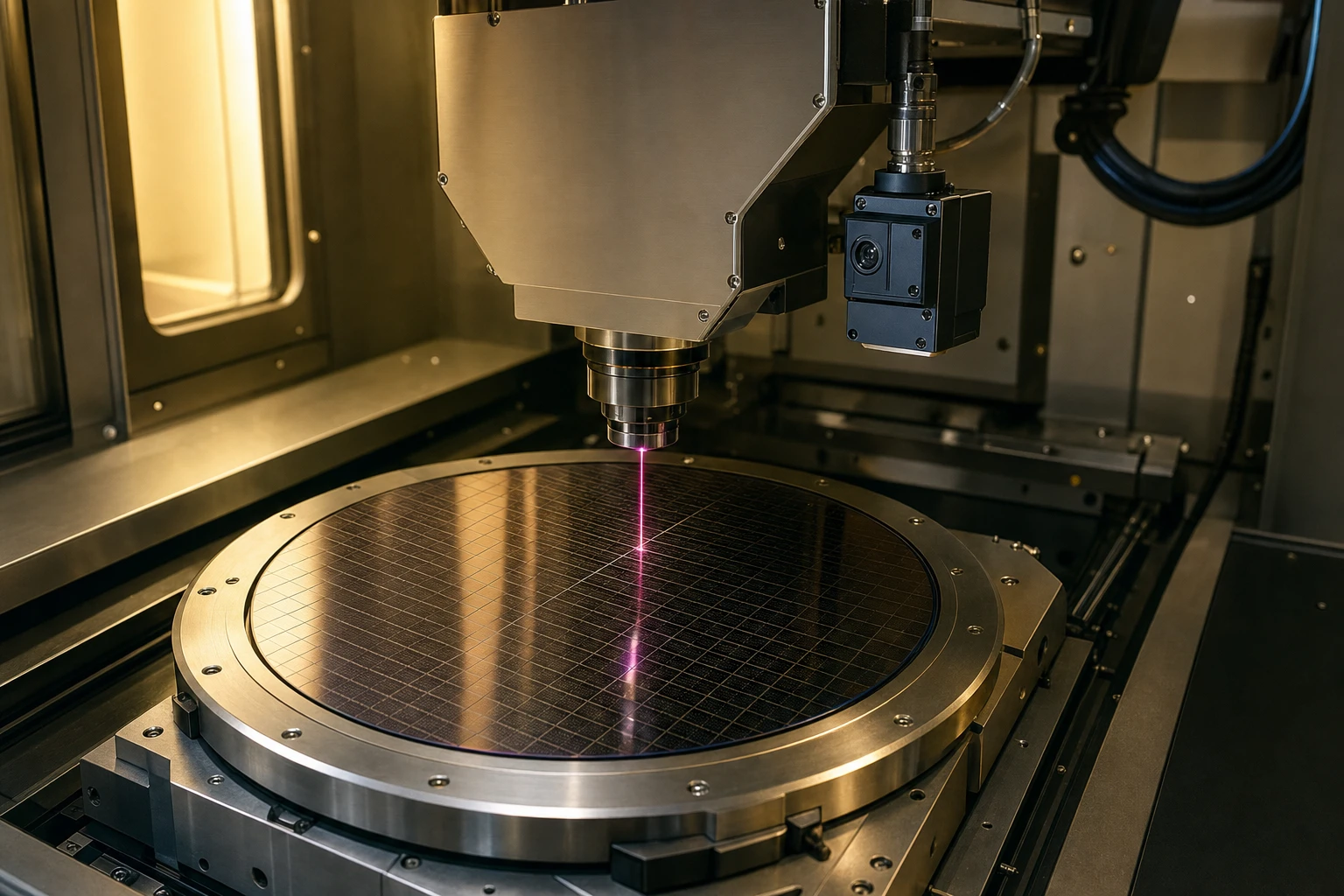
You know the feeling. You are running a high-speed laser marking system on a busy factory floor. It is mid-July. The workshop temperature climbs past 40°C. Inside the marking machine cabinet, it is even hotter, maybe 55°C. Suddenly, the engraving starts drifting. Characters are shifting. Logos are looking slightly warped, and the positioning isn’t where it should be. For any R&D engineer, this is an absolute nightmare because customers will complain about accuracy, and they’ll blame your galvo scanners.
If you have worked on laser steering, you know that closed-loop galvos rely on built-in optical position detectors to tell where the mirror is pointing. The heart of these detectors is a photodiode. When the temperature spikes, the photodiode’s dark current drifts, messing up the position feedback. In these scenarios, choosing a true low thermal drift photodetector is the single best hardware decision you can make.
Instead of chasing complex firmware patches, you want a hardware-level fix. Let’s face it: trying to code your way out of bad physics is a recipe for endless calibration headaches. That is why finding a reliable low thermal drift photodetector is so critical for industrial systems. If you start with a low thermal drift photodetector, the job of your feedback loop becomes tenfold easier. A high-quality low thermal drift photodetector ensures that the offset remains stable, even when your cabinet turns into a mini sauna.
Honestly, we have seen so many teams spend months writing look-up tables to compensate for temperature drift, only to realize that a simple swap to a low thermal drift photodetector would have solved 90% of their drift issues out of the box. Buying a cheap sensor and then spending weeks of engineering time trying to fix it is a classic trap. With a low thermal drift photodetector, you bypass all that stress.
The Dirty Physics of Photodiode Dark Current and Thermal Drift
Let’s look at the actual physics without getting bogged down in overly academic fluff. Every silicon photodiode has dark current—the tiny leakage current that flows even when there is absolutely zero light hitting the active area.
In a standard position sensor, this dark current (designated as ID) is usually negligible at room temperature, maybe a few picoamps. But silicon is highly sensitive to temperature. The formula for how dark current changes with temperature is basically:
ID(T) = ID(T0) * 2^((T – T0) / 10)
This means the dark current doubles roughly every 8°C to 10°C. Think about that for a second. If your galvo scanner runs at 25°C in the lab, your position detector’s dark current might be a comfortable 10 pA. But when that machine sits in a hot factory workshop at 45°C, and the scanner coils heat up the housing to 65°C, that is a 40°C delta. Your dark current hasn’t just doubled; it has gone up by a factor of 16! Your 10 pA has ballooned to 160 pA.
Now, why does this matter for galvo scanners? The position detector doesn’t look at absolute light levels. It usually uses a segmented photodiode (often a bi-cell or quadrant structure) to balance out differential current. When the mirror rotates, it blocks or shifts a light beam (usually from an LED or NIR source) across the segments. The difference in current between Segment A and Segment B tells the driver where the mirror is.
But when dark current goes haywire, the temperature coefficient of ID kicks in differently across the chip. Even a tiny mismatch in dark current between the segments creates a fake offset. The controller thinks the mirror has moved, so it adjusts the motor coil, causing actual physical position drift. If you don’t have a high-quality low thermal drift photodetector, your feedback signal is basically lying to your control loop.
By utilizing a low thermal drift photodetector, you are selecting silicon that is specifically processed to keep that baseline leakage current incredibly low. In a low thermal drift photodetector, the absolute values of dark current are so small that even when they multiply at high temperatures, they stay well below the threshold that causes position offset. Choosing a low thermal drift photodetector means your common-mode rejection actually works. Without a low thermal drift photodetector, you’re basically flying blind when the workshop heats up.
If you are currently evaluating photodiodes, look closely at the dark current specs at elevated temperatures, not just the 25°C baseline. A true low thermal drift photodetector will explicitly show flat characteristics across a wider thermal range. This is why a low thermal drift photodetector is so different from a generic, off-the-shelf catalog photodiode. A low thermal drift photodetector is engineered to minimize the temperature coefficient of ID so your feedback remains rock solid.
Si PIN photodiodes for Galvo PDC-C2928-NIR-B
Optimize scanning with our 940nm PIN photodiode chip, PDC-C2928-NIR-B. This 940nm PIN photodiode chip ensures precise galvo position sensing and low noise.
Why Software Compensation is Mostly a Trap
When engineers first encounter these kind of drift issues, the immediate reaction of the firmware team is usually: “Oh, we can just write a software compensation algorithm! We’ll stick a thermistor right next to the sensor, measure the temperature, and offset the DAC signal.”
Let’s talk about why trying to design a thermal compensation photodiode algorithm is mostly a trap.
First, no two photodiode chips are perfectly identical. The temperature coefficient of ID has physical variations across different wafer runs. If you want a software algorithm to work perfectly, you can’t just write one master formula and apply it to every galvo scanner. You would have to calibrate every single galvo scanner individually in a temperature chamber at your factory. Imagine putting every unit through a 2-hour thermal cycle during QC just to map out its unique drift curve. The production line bottleneck would be insane!
If you swap that cheap chip for a low thermal drift photodetector, your unit-to-unit variation drops dramatically. A low thermal drift photodetector makes it so you don’t need highly complex, individual thermal calibration. Instead of calibrating every single machine, a low thermal drift photodetector allows you to use a simple, broad compensation model, or even bypass software calibration entirely for mid-range machines.
Plus, thermal lag is a massive issue. A thermistor mounted on the driver PCB or even the scanner housing doesn’t measure the temperature of the silicon junction inside the photodiode in real-time. There is always a delay. During rapid scanning, the galvo motor generates sudden bursts of heat, causing localized thermal spikes. A software algorithm will always lag behind these fast changes. A hardware solution, like integrating a low thermal drift photodetector, responds instantly because the silicon itself is inherently stable.
Honestly, saving a few bucks on a sensor chip only to spend tens of thousands of dollars in engineering hours and QC testing is a classic case of being penny-wise and pound-foolish. When you use a low thermal drift photodetector, you’re solving the problem at the physical source. If you don’t start with a low thermal drift photodetector, you’re just putting a band-aid on a broken leg. That is why we always recommend transitioning to a low thermal drift photodetector before you even touch a line of calibration code. A low thermal drift photodetector will simplify your system architecture more than any digital compensation script ever could.
Real-World Case Study: Saving a Laser Marker from the Summer Heat
Let’s talk about a real case we handled last year. A manufacturer of high-end fiber laser marking systems was exporting machines to tropical regions. During the summer months, their customers reported that after about 30 minutes of continuous marking, the laser-etched barcodes on metal components started drifting by as much as 150 microns.
The engineering team spent weeks trying to write a complex calibration routine. They added thermistors, built look-up tables, and updated their FPGA code. It helped a little, but it was incredibly tedious to calibrate each machine, and it still couldn’t handle the rapid thermal spikes when the laser marker switched from standby to full-speed engraving.
They reached out to us and shared their optical sensor layout. They were using a generic, low-cost silicon photodiode. When we put their sensor on our test bench and simulated a 50°C environment, we found that the dark current mismatch between their position sensor segments was climbing from 5 pA to nearly 2.2 nA. This mismatch was directly causing their feedback circuit to register a false angular offset.
We recommended swapping their generic setup for a dedicated PIN chip structure that functions as a low thermal drift photodetector for galvo positioning. By switching to a balanced, low-drift chip layout, the thermal drift dropped by over 85% immediately, without any software changes. They completely stripped out the complex look-up tables from their firmware, simplifying their QC process and saving hundreds of manufacturing hours per month.
Choosing the Right Hardware: BeePhoton Solutions
If you’re ready to fix the hardware, you need to look at specific silicon designed for this exact headache. At BeePhoton, we’ve spent years optimizing PIN photodiode chips specifically for high-precision analog feedback in galvanometer scanners.
Let’s look at three practical chip options that function as a low thermal drift photodetector for galvo positioning:
- For 940nm Systems: If your position sensing setup uses a 940nm LED or laser diode source, you should look at the PDC-C2928-NIR-B 940nm PIN photodiode chip. This chip is engineered with an ultra-flat thermal response. It functions as an exceptional low thermal drift photodetector, keeping the dark current down to picoamp levels even at elevated workshop temperatures.
- For 920nm Systems: If your optical layout is optimized around 920nm, the PDC-C2929 920nm silicon PIN photodiode is the go-to choice. It behaves as a highly stable low thermal drift photodetector, minimizing the temperature coefficient of ID so that your feedback loop doesn’t drift when the laser marking machine has been running for hours on end.
- For Multi-Axis or Differential Sensing: If you are designing a high-end galvo with a segmented positioning sensor, you should check out the PDC-2C3432-NIR-B segmented PIN photodiode chip. This segmented design acts as a balanced low thermal drift photodetector. Because the segments are fabricated on the same silicon substrate, any remaining minor thermal drift is common-mode and cancels out beautifully in your differential amplifier circuit. This is the ultimate low thermal drift photodetector setup for high-end, sub-microradian galvos.
When choosing a low thermal drift photodetector, you have to consider how the active area matches your beam shape. If the beam spot is too large, you lose resolution; if it’s too small, alignment is a pain.
Using a high-quality low thermal drift photodetector from a specialized manufacturer ensures you get the right balance of active area size and low dark current. If you’ve been using cheap, generic photodiodes, swapping them out for a dedicated low thermal drift photodetector is usually a drop-in upgrade that immediately tightens up your position accuracy.
Si PIN photodiodes for Galvo PDC-2C3432-NIR-B
The PDC-2C3432-NIR-B is a specialized segmented PIN photodiode chip engineered for precise differential position feedback in high-speed galvanometer scanners. Integrating this dual-channel segmented PIN photodiode chip allows systems to obtain accurate angular tracking with minimal signal noise.
Comparison of Low Thermal Drift Photodetector Options
To make things easy, here is a quick breakdown of how these different options stack up when you’re looking to integrate a low thermal drift photodetector into your galvo design:
| Sensor Option | Primary Wavelength | Package Style | Best Suited For | Role as a Low Thermal Drift Photodetector |
|---|---|---|---|---|
| PDC-C2928-NIR-B | 940 nm | Bare Chip / Custom COB | Compact industrial galvos with high ambient heat | Standard single-segment low thermal drift photodetector |
| PDC-C2929 | 920 nm | TO-can / Customized SMD | Retrofitting older analog optical position designs | Rugged hermetic low thermal drift photodetector option |
| PDC-2C3432-NIR-B | 920 – 940 nm | Segmented Chip | High-precision dual-axis or differential setups | Balanced dual-segment low thermal drift photodetector |
As you can see, matching the right low thermal drift photodetector to your light source wavelength is key. When your LED source wavelength matches the peak sensitivity of your low thermal drift photodetector, you maximize the signal-to-noise ratio, which naturally minimizes the impact of any residual dark current.
Practical Analog Circuit Tricks for High-Temp Environments
Even if you have the best low thermal drift photodetector on the market, bad circuit design can still mess things up. If you’re designing the transimpedance amplifier (TIA) stage, here are a few hard-won tips from our engineering bench:
- Keep Bias Voltage Low: Dark current is directly proportional to reverse bias voltage. If you bias your photodiode at 5V or 10V, you will get faster response times, but your dark current will explode. For galvo position detectors, speed is important, but stability is critical. Try running your low thermal drift photodetector with zero bias (photovoltaic mode) or a very low reverse bias (like 0.1V). This keeps the dark current at absolute minimum levels.
- Match your Op-Amp Drifts: The input bias current of your operational amplifier also drifts with temperature. If you use a cheap op-amp, its input drift can easily swamp the stable signal from your low thermal drift photodetector. Use a high-precision, low-drift CMOS or JFET input op-amp.
- Use Guard Rings: On your PCB layout, surround the high-impedance traces from your low thermal drift photodetector to the op-amp input with a guard ring. This prevents leakage currents from other components on the board from creeping into your measurement signal.
- Keep Heat Sources Away: Do not place high-power components, like the H-bridge drivers for the galvo motor coils, right next to your low thermal drift photodetector circuit. Thermally isolate the sensor board from the motor driver stage as much as possible.
When you design your layout around a low thermal drift photodetector with these tips in mind, you ensure that the physical stability of the silicon actually translates to the analog output. A low thermal drift photodetector circuit that is properly isolated from thermal gradients will perform flawlessly even in the nastiest industrial environments.
Frequently Asked Questions
How does a low thermal drift photodetector prevent galvo marking offset?
A low thermal drift photodetector is manufactured to keep its leakage (dark) current extremely low, even at high temperatures. In galvo position feedback loops, changes in dark current can look like physical mirror movement. By maintaining a flat, ultra-low dark current across a wide thermal range, the sensor prevents the controller from making incorrect position adjustments, eliminating physical drift on your marking output.
Why choose a low thermal drift photodetector over software calibration?
While software calibration can correct some temperature drift, it requires calibrating every single galvo scanner individually in a temperature chamber due to chip-to-chip variations. This is incredibly slow and expensive. A low thermal drift photodetector solves the issue at the hardware level, offering consistent performance out of the box and drastically reducing factory QC bottlenecks.
Can a low thermal drift photodetector handle sudden thermal spikes?
Yes! Software algorithms often struggle with thermal lag because thermistors cannot measure the real-time temperature of the silicon junction. A low thermal drift photodetector responds instantly because the stability is built into the physical properties of the silicon itself, making it highly effective at handling rapid temperature fluctuations caused by high-speed scanning.
Si PIN photodiodes for Galvo PDC-C2929
The PDC-C2929 is a budget-friendly 920nm silicon PIN photodiode chip. This 920nm silicon PIN photodiode offers stable, cost-effective scanner position tracking.
Ready to Beat the Heat?
If your laser marking machines are suffering from position drift in hot workshops, it is time to stop patching the issue with complicated code and fix it at the source. Investing in a high-quality low thermal drift photodetector is the most cost-effective way to guarantee long-term accuracy and keep your customers happy.
Whether you need bare die chips for a custom COB assembly or a packaged sensor for a quick upgrade, the team at BeePhoton is here to help. We’ve helped dozens of laser marking manufacturers upgrade their feedback loops with high-stability silicon.
Don’t let hot summer workshops warp your marking quality. If you want to discuss your specific optical layout or request samples of a low thermal drift photodetector to test in your own lab, head over to our contact page or send an email directly to info@photo-detector.com. Our engineering team will get back to you with real, practical advice and a quote that fits your production budget.