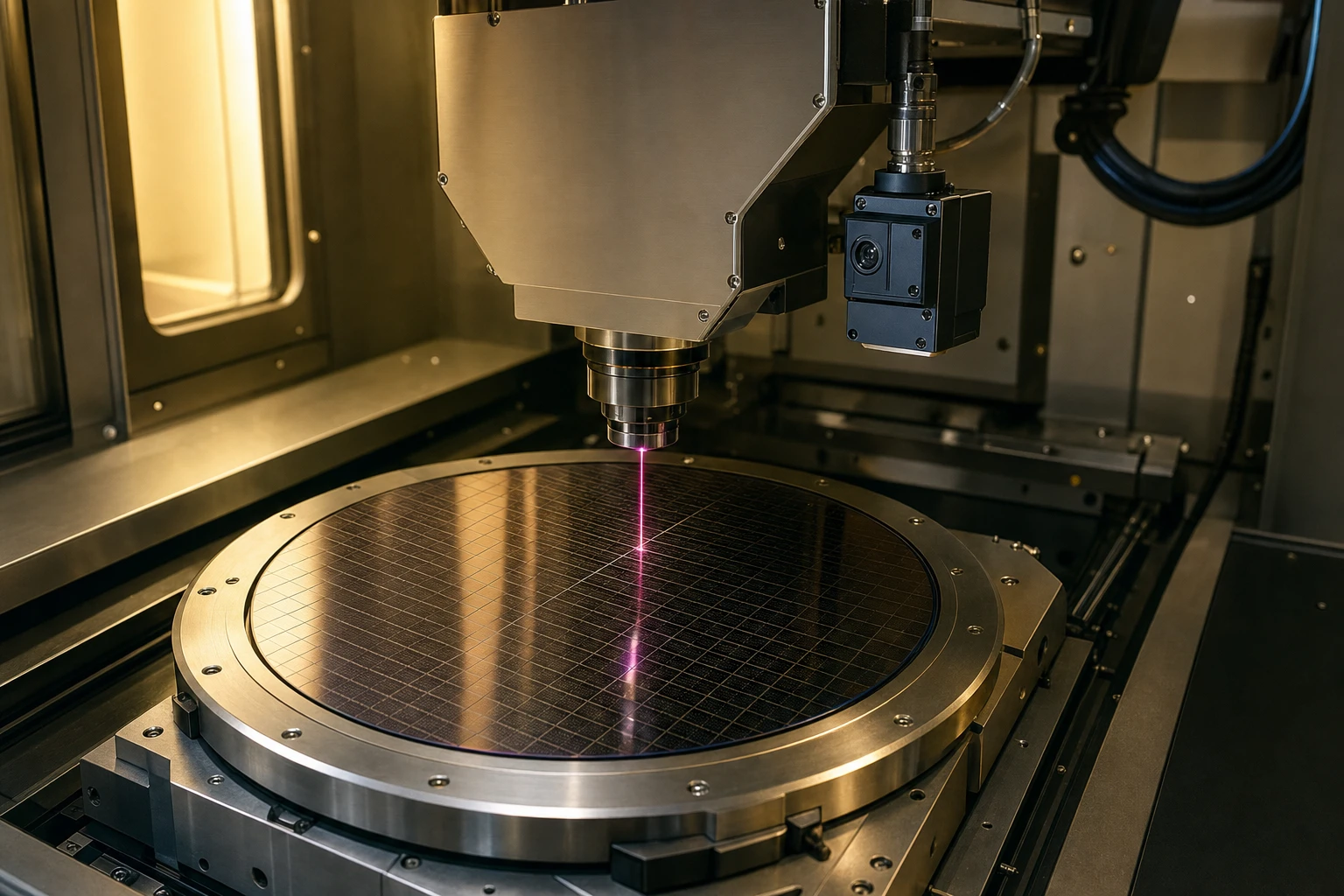
If you have ever spent hours tweaking exposure times, swapping out expensive industrial cameras, or adjusting lens focus only to find that your vision system still cannot reliably detect a hairline scratch on a polished metal surface, you are not alone. It is a common frustration for machine vision system integrators. You build a highly advanced setup, yet a simple scratch on a machined part goes completely unnoticed. The issue is rarely the camera sensor itself. In most cases, the culprit is the illumination.
Choosing the right machine vision LED can make or break an inspection line. Many integrators default to using white light, thinking it covers all bases because it contains all visible wave lengths. But white light often washes out critical surface details, leading to high false-reject rates or, worse, missed defects. That is where a specialized 465nm blue machine vision LED comes into play. By switching to this specific wavelength, you can dramatically improve contrast, make micro-defects stand out, and build a far more reliable inspection system. Let us look at why this works and how you can implement it in your next project.
The Physics Behind 465nm Blue LED Contrast
To understand why a blue machine vision LED outperforms other lighting options on reflective surfaces, we need to look at the basic physics of how light behaves when it hits a material. When light strikes a surface, it is either absorbed, reflected, or scattered.
Wavelength and Surface Scattering
The way light scatters on a microscopic level is heavily dependent on its wavelength. According to the principles of Rayleigh scattering, the intensity of scattered light is inversely proportional to the fourth power of its wavelength. We can write this relationship simply:
Scattering Intensity = Constant / (Wavelength to the power of 4)
Let us do some quick, real-world math to compare a standard red machine vision LED (typically around 630nm) with a blue machine vision LED (465nm):
Ratio of Scattering = (630 / 465) to the power of 4
Ratio of Scattering = (1.355) to the power of 4
Ratio of Scattering = 3.37
This simple math tells us something incredible: a 465nm blue machine vision LED scatters roughly 3.4 times more intensely on surface roughness than a red LED! Because blue light has a much shorter wavelength, it does not penetrate surface layers. Instead, it interacts directly with the outermost surface boundaries. When blue light hits a microscopic scratch or a tiny metal burr, it scatters wildly. This scattered light enters the camera lens, making the defect appear bright and sharp against a dark background.
Calculating the Contrast Improvement
In machine vision, we define contrast using the Michelson contrast formula, which looks like this:
Contrast = (Intensity of Defect – Intensity of Background) / (Intensity of Defect + Intensity of Background)
If the background and the defect reflect light in the exact same way, the difference between their intensities is zero, resulting in a contrast of 0. The camera cannot see the defect.
However, when you illuminate a polished metal sheet using a 465nm blue machine vision LED, the flat surface reflects the light away from the camera lens (specular reflection), making the background appear dark. Meanwhile, the microscopic scratches scatter the short-wavelength blue light directly into the camera lens. This maximizes the difference between the defect and the background, pushing the contrast value close to 1 (or -1, depending on your setup).
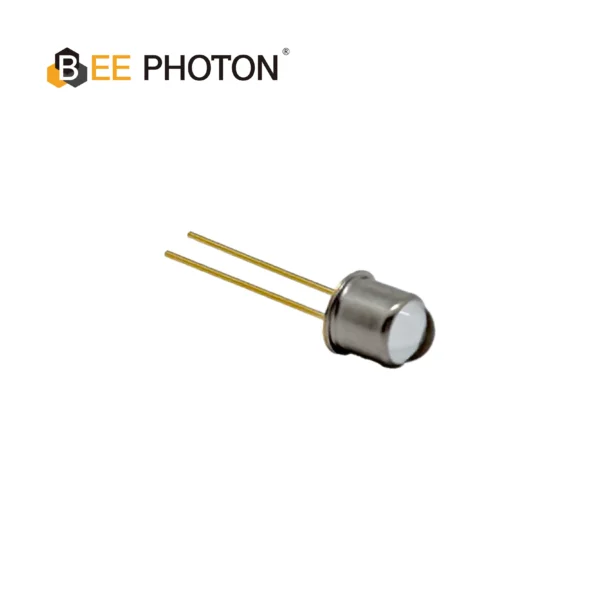
Blue LED E465-4-201L4
The E465-4-201L4 is a high-performance 465nm Blue LED engineered specifically for precision industrial applications requiring focused light output. Delivering high luminosity with a strictly controlled 460-470nm wavelength range, this 465nm Blue LED serves as a critical component for optical switches and rotary encoders.
Why Choose a 465nm Machine Vision LED Over Other Wavelengths?
You might wonder why we focus specifically on 465nm. Why not go even shorter, like ultraviolet (UV) light at 365nm?
While UV light offers even shorter wavelengths and potentially higher scattering, it comes with a host of practical headaches. First, standard glass camera lenses absorb UV light, meaning you would have to buy expensive quartz lenses. Second, UV radiation can degrade optical filters and even damage camera sensors over time. Third, UV lighting poses safety risks to operators on the factory floor.
A 465nm blue machine vision LED sits in the perfect sweet spot. It provides the high scattering benefits of short-wavelength light without any of the safety risks or expensive hardware requirements associated with UV. Furthermore, standard silicon-based CMOS camera sensors have excellent quantum efficiency around the 400nm to 500nm range. This means your camera is highly sensitive to 465nm light, allowing you to run your system with shorter exposure times and higher frame rates.
| Wavelength | Light Color | Relative Scattering Intensity | Typical Surface Penetration | Best Inspection Applications |
|---|---|---|---|---|
| 850nm | Infrared (IR) | Very Low | High (Penetrates surfaces) | Inspecting through packaging, sub-surface defects |
| 630nm | Red | Low | Medium | OCR on printed labels, matte plastic surfaces |
| 525nm | Green | Medium | Medium-Low | Inspecting copper traces on green PCB boards |
| 465nm | Blue | High | Very Low (Surface only) | Micro-scratches on metals, glass defects, transparent films |
By choosing a dedicated blue machine vision LED rather than a generic white light, you focus all your optical energy into the exact wavelength that highlights surface features. This is a crucial concept in modern industrial vision lighting.
Practical Applications of Blue Light Inspection in Optical Defect Detection
Now that we have covered the physics, let us look at where you should actually deploy a blue machine vision LED in your industrial inspection systems.
Spotting Micro-Scratches on Polished Metal Surfaces
Whether you are inspecting machined aluminum casings, stainless steel medical devices, or polished automotive trim, metal surfaces are notoriously difficult to image. If you use a standard white machine vision LED, the broad spectrum of light bounces off the reflective surface and creates massive glare. This glare blinds the camera sensor.
By utilizing a 465nm blue machine vision LED in a low-angle configuration, you can bypass this glare. The flat, polished metal reflections bypass the camera, while any scratch, nick, or tool mark scatters the blue light back into the camera. The result is a high-contrast image where the metal surface looks black and the scratches glow like neon lines. This makes life infinitely easier for your machine vision software to perform high-speed optical defect detection.
Solder Joint and PCB Inspection
Printed circuit boards (PCBs) are a chaotic mix of colors, textures, and heights. Solder joints are highly reflective, while the solder mask is often green, blue, or black.
Using a red light can cause the green solder mask to appear dark, which sometimes makes it hard to distinguish from other defects. A blue machine vision LED provides excellent contrast on solder joints. Because blue light does not penetrate the solder mask, it gives you a clean, profile of the solder fillet, helping you easily identify cold solder joints, bridging, or missing components.
High-Precision Metrology
If you are measuring the precise physical dimensions of a part, edge detection is everything. If the edges of your part look blurry or fuzzy in the image, your measurement accuracy drops.
Because blue light has a shorter wavelength, it suffers much less from diffraction than red or infrared light. When you pair a blue machine vision LED with a high-resolution telecentric lens, you get sharp, well-defined edges. This setup is a game-changer for high-precision metrology applications where micrometer-level accuracy is required.
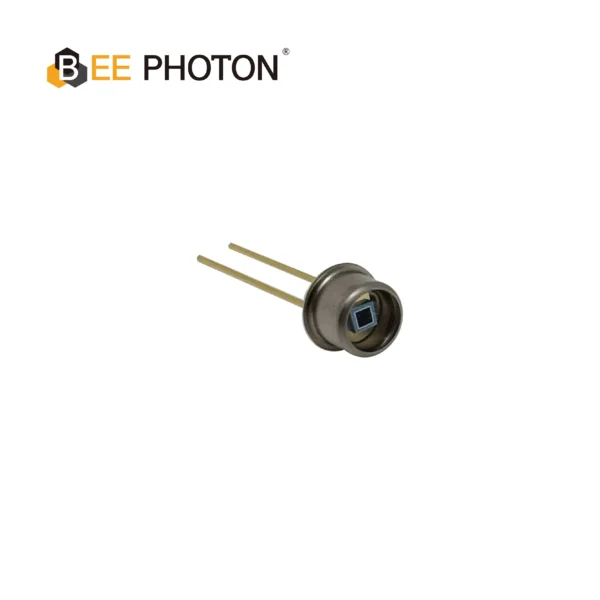
Si PIN Photodiode with UV sensitivity enchanced (190-1100nm) PDCT01-F01
Experience precise UV detection with our Quartz Window Si PIN Photodiode. Ideal for spectroscopy, it offers high sensitivity and low noise across 190-1100nm. This reliable Si PIN photodiode ensures accurate analytical results.
Real-World Case Study: Detecting Scratches on Machined Aluminum Parts
Let us talk about a real-world project to see how this works in practice. A manufacturing facility was struggling with their quality control line for machined aluminum automotive brackets. They were using a standard white ring light, which is a common, go-to machine vision LED setup for many system integrators.
The Problem
The brackets had a brushed metal finish, and the inspection system needed to find hairline scratches deeper than 10 micrometers. However, the machining marks (tool paths) on the aluminum were reflecting white light in a chaotic pattern. The vision software could not reliably distinguish a real defect (a scratch) from a harmless tool mark.
This resulted in a massive 15% false-reject rate. Operators had to manually reinspect thousands of parts every day, which slowed down production and cost the company a lot of money.
The Solution
The engineering team decided to swap the white light source for a high-intensity 465nm blue machine vision LED coaxial light source from BeePhoton. They also added a narrow-band blue pass filter to the camera lens.
Let us compare how the two setups route the light:
Scenario A: Without a Filter (Using White Light)
Overhead Ambient Light combined with a White LED Ring Light enters the camera lens directly. This results in a blurry, glaring image with low contrast because too many different wave lengths are bouncing around.
Scenario B: With a Blue Filter and 465nm LED
The ambient light is completely blocked by the lens filter. Only the 465nm blue LED light passes through the filter and reaches the camera lens. This results in a sharp, high-contrast image where the scratches are brightly highlighted.
Because blue light has a shorter wavelength, it scattered intensely off the sharp edges of the microscopic scratches but did not penetrate or scatter as wildly off the smoother, rounded tool marks.
The Results
The contrast ratio of the scratches compared to the surrounding machined surface improved instantly:
- Original Contrast (White Light): 0.18 (Barely visible)
- New Contrast (465nm Blue LED): 0.74 (Highly visible)
With the new machine vision LED setup, the software easily identified every single scratch. The false-reject rate fell from 15% to a mere 0.6%. By investing in a dedicated 465nm blue light, the factory eliminated their manual inspection bottleneck within a week.
How to Optimize Your Industrial Vision Lighting Setup
Simply buying a blue machine vision LED and placing it onto your frame is not enough. To get the best possible contrast, you need to configure your industrial vision lighting setup correctly.
Choose the Right Angle of Incidence
The angle at which your light hits the target material completely changes the image output.
- Low-Angle Ring Light: If you want to detect surface scratches or raised edges, mount your blue machine vision LED at a very low angle (almost parallel to the surface). The light will bounce off the flat surface and escape the camera, but the scratches will catch the light and shine brightly.
- Coaxial Lighting: If you are inspecting highly flat, mirror-like surfaces, coaxial lighting is a better choice. The blue light is directed down the same optical axis as the camera lens. Any minor surface deviation or scratch will scatter the light away from the camera, showing up as dark defects on a bright background.
Utilize Optical Filters
If your factory floor has overhead fluorescent lights or windows that let in natural sunlight, this ambient light will interfere with your camera sensor. It ruins your carefully designed lighting contrast.
Always mount a bandpass filter that matches the wavelength of your blue machine vision LED onto your camera lens. A 465nm bandpass filter will block all red, green, infrared, and ambient white light, allowing only the pure 465nm blue light to reach the sensor. This makes your vision system incredibly robust against changing environmental lighting conditions throughout the day.
Strobing Your LEDs for High-Speed Inspection
If you are inspecting parts on a fast-moving conveyor belt, continuous lighting can cause motion blur. To prevent this, you should strobe your machine vision LED.
By using a specialized strobe controller, you can pulse the blue light for a fraction of a millisecond. This intense, short burst of light freezes the motion of the part on the conveyor, giving you a crystal-clear image without any motion blur. Additionally, strobing allows you to run the machine vision LED at a much higher current than normal, producing a far brighter flash of light without overheating the LED chip.
Choosing the Right Machine Vision LED Hardware
When you are looking to purchase illumination hardware, reliability and thermal management are key. Industrial environments are dusty, hot, and constantly vibrating. A cheap LED light source will degrade quickly, losing its brightness over time and throwing off your calibrated inspection algorithms.
A poorly designed machine vision LED will suffer from thermal drift. As the LED temperature rises, its light output intensity drops, and its wavelength can shift. This variation messes up your inspection software because the images from the start of a shift look different from the images at the end of the shift. A high-quality machine vision LED should feature an integrated constant current driver and robust thermal heat-sinking to keep the light output rock-solid.
When selecting a machine vision LED, you need to look for:
- Robust Housing: Heavy-duty aluminum housings protect the LEDs from physical damage and act as a heatsink.
- Consistent Brightness: High-quality drive circuitry ensures the light output does not drift over time.
- Customization Options: Sometimes an off-the-shelf ring light does not fit your mounting constraints. Working with a flexible manufacturer who can customize the LED array shape or wavelength is highly beneficial.
If you are looking for high-intensity, industrial-grade light sources designed to withstand demanding factory environments, you can explore the specialized options available in BeePhoton’s light source category. Having reliable illumination is just as important as choosing the right camera sensor. We test every single machine vision LED array before shipping to make sure it delivers consistent, calibrated performance on your line.
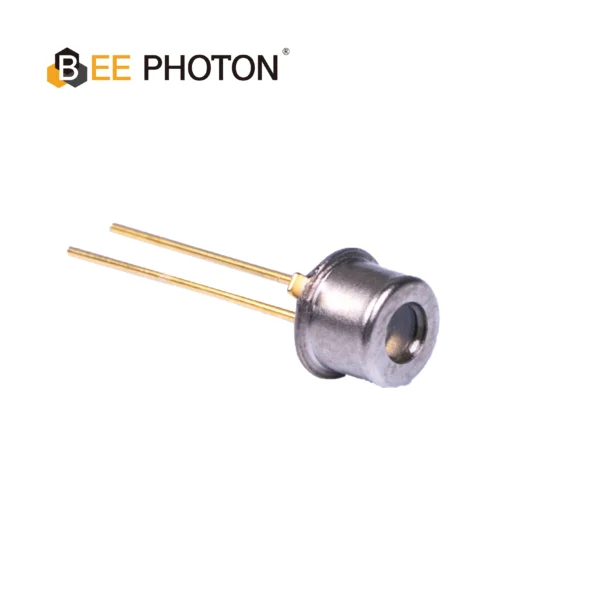
Si PIN Photodiode with low dark current (350-1060nm) PDCT01-201
Experience superior signal clarity with our Si PIN photodiode, engineered for ultra-low dark current and high stability. This photodiode ensures precise laser detection and optical measurements. Our low dark current Si PIN photodiode offers exceptional performance.
FAQs on 465nm Blue LED Contrast
Why should I use a 465nm blue machine vision LED instead of a standard white LED?
A white LED spreads its energy across the entire visible spectrum (400nm to 700nm). Because long wavelengths (like red and yellow) penetrate surfaces more deeply, they tend to wash out microscopic surface features. A 465nm blue machine vision LED focuses all its optical energy into a short wavelength. This short wavelength scatters much more intensely on surface defects and does not penetrate the material, creating significantly higher contrast for scratches and surface imperfections.
Can a blue machine vision LED work on colored surfaces?
Yes, but you have to keep color wheel physics in mind. In machine vision, if you illuminate a color with its opposing color on the color wheel, it will appear dark. If you illuminate it with the same color, it will appear bright. For example, if you use a blue machine vision LED on a red plastic part, the red surface will absorb the blue light and look dark. This can actually be incredibly useful if you want to create a dark background to highlight a light-colored defect.
How do I prevent ambient factory light from messing up my blue light inspection?
The easiest and most effective way is to install a 465nm bandpass filter on your camera lens. This filter acts as a gatekeeper, blocking all other wavelengths of light (like overhead yellow bulbs or sunlight) and only letting the blue light from your machine vision LED pass through to the camera sensor.
Do blue LEDs degrade faster than other LED colors?
Historically, blue and UV LEDs experienced slightly faster degradation rates than red LEDs due to higher operating temperatures and material characteristics. However, modern high-quality industrial machine vision LED designs utilize advanced thermal management and robust heat-sinking. If driven correctly (especially when strobed), a quality blue LED will last for tens of thousands of operating hours without any noticeable drop in intensity.
Elevate Your Inspection System with BeePhoton
Are subtle surface defects slipping past your current quality control line, leading to costly customer complaints or manual sorting?
When microscopic scratches and hairline fractures go undetected, your entire production yield suffers. Relying on generic, washed-out white lighting setups is no longer enough for modern manufacturing tolerances.
By shifting your vision system to a dedicated 465nm blue machine vision LED, you can instantly turn invisible surface defects into high-contrast features that your inspection software can catch every single time. It is one of the easiest, most cost-effective upgrades you can make to your existing vision line.
At BeePhoton, we design and manufacture high-performance optical solutions and industrial lighting hardware built for real-world manufacturing environments. Our team can help you select, test, and integrate the ideal lighting setup for your specific inspection needs. We specialize in engineering custom machine vision LED solutions that match your unique mounting brackets, working distances, and brightness targets.
Ready to eliminate false-rejects and boost your inspection accuracy? We invite you to browse our full selection of industrial machine vision light sources to find the right configuration for your project. If you have a unique setup or need a customized solution, don’t hesitate to contact our vision experts today, or drop us an email directly at info@photo-detector.com. Let us help you get the contrast you need.