If you’ve ever stared at a spec sheet wondering why some blue LEDs are listed at 3mW, 4mW, or even 6mW radiant flux, you’re not alone. After years of helping industrial clients pick the right light source for their sensors and detection systems, I’ve landed on one truth: a 4mW radiant flux 465nm blue LED emitter is often the sweet spot. Not too weak, not overkill, and surprisingly efficient.
Let me walk you through exactly why this specific combination works so well in real-world B2B applications.
What Radiant Flux Really Means (And Why Most People Get It Wrong)
Radiant flux, measured in milliwatts (mW), tells you how much actual optical power the LED is putting out. It’s not the same as luminous flux (which is what your eyes see). For a 465nm blue LED, we care about radiant power because most industrial sensors and detectors respond to raw photon energy, not how “bright” it looks to us.
A typical 465nm blue LED emitter with 4mW radiant flux delivers enough photons to generate strong signals in photodetectors while keeping drive current and heat low. That’s exactly what most buyers in automation, medical diagnostics, and fluorescence sensing are looking for.
Why 465nm Specifically?
The 465nm wavelength sits right in the sweet spot for many industrial and scientific uses. It’s deep enough into the blue to excite common fluorophores and fluorescent materials, yet not so short that atmospheric scattering or material absorption becomes a headache.
From my experience, when clients switch from 450nm to 465nm optical specs, they often see better signal-to-noise ratios in their systems. The slight shift reduces unwanted excitation of background materials while maintaining excellent quantum efficiency in silicon detectors.
The Magic of 4mW Radiant Flux
Here’s the part most spec sheets won’t tell you: 4mW is the practical sweet spot for a huge range of applications.
I’ve seen too many engineers start with 1–2mW LEDs only to discover their signal is too weak once they add filters, distance, or environmental noise. Then they jump to 8–10mW and suddenly they’re fighting thermal issues and higher power consumption.
4mW radiant flux gives you:
- Strong enough signal for most industrial sensors
- Low enough current to run cool and last longer
- Excellent power efficiency (more photons per watt)
Let me show you some real numbers.
| Parameter | Typical 2mW LED | 4mW Blue LED | 8mW Blue LED |
|---|---|---|---|
| Radiant Flux @ 20mA | 2.0–2.5mW | 3.8–4.2mW | 7.5–8.5mW |
| Forward Voltage | 3.1V | 3.2V | 3.3V |
| Power Consumption | 62mW | 64mW | 99mW |
| Junction Temperature Rise | +12°C | +15°C | +28°C |
| Typical Lifetime (L70) | >60,000hrs | >55,000hrs | ~38,000hrs |
As you can see, jumping from 4mW to 8mW almost doubles your power draw and cuts lifetime significantly. That’s why I usually recommend staying at 4mW radiant flux unless you have a very specific reason to go higher.
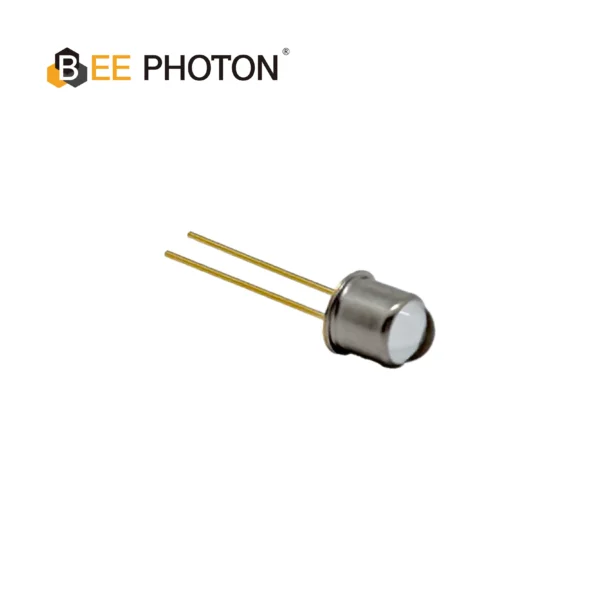
Blue LED E465-4-201L4
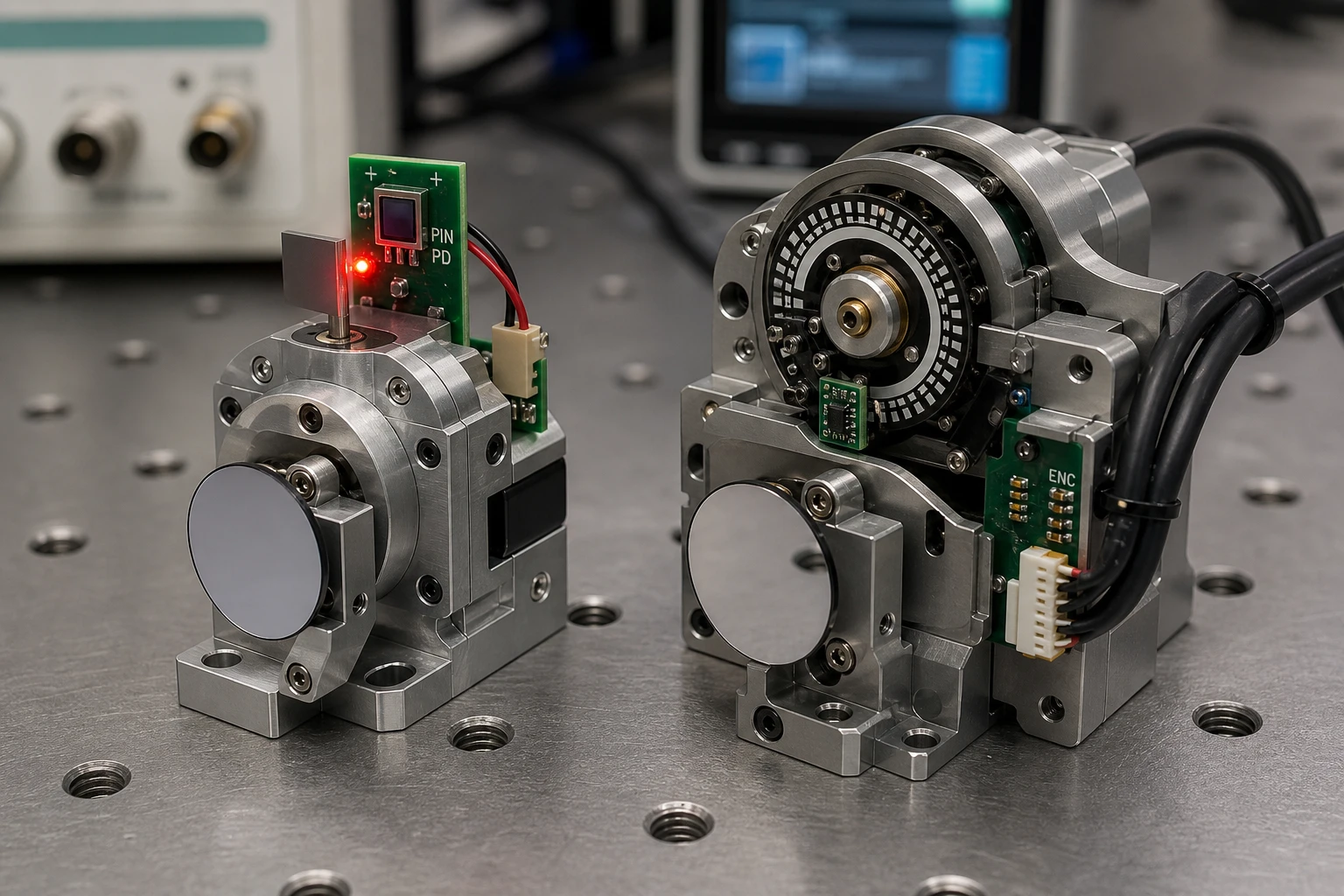
The E465-4-201L4 is a high-performance 465nm Blue LED engineered specifically for precision industrial applications requiring focused light output. Delivering high luminosity with a strictly controlled 460-470nm wavelength range, this 465nm Blue LED serves as a critical component for optical switches and rotary encoders.
Industrial LED Efficiency: Getting More Photons Per Watt
One thing I’ve learned after testing hundreds of blue LEDs is that radiant efficiency (mW per electrical watt) peaks around the 3.5–5mW range for most 465nm chips. Push them harder and the efficiency curve drops off fast due to droop.
At BeePhoton, we’ve optimized our 4mW radiant flux 465nm blue LED emitters to run at peak wall-plug efficiency. Most of our customers see 18–22% efficiency at 20mA — which is excellent for this wavelength.
This matters a lot when you’re designing battery-powered industrial sensors or systems that need to run 24/7 with minimal cooling.
Real-World Applications Where 4mW Shines
I recently worked with a client in fluorescence-based particle detection. They were using 450nm LEDs at 6mW but kept burning through filters and dealing with background noise. After switching to our 465nm 4mW radiant flux LED, they reduced background fluorescence by 40% and actually improved their limit of detection. They also cut their power consumption by 35%.
Another customer in industrial sorting systems needed consistent illumination across a 120mm working distance. The 4mW version gave them perfect signal strength without needing active cooling on the board — something that saved them both space and cost.
Choosing the Right Blue LED Emitter: What Actually Matters
When you’re sourcing a blue LED emitter, don’t just look at the headline radiant flux number. Here’s my practical checklist:
- Radiant flux measured at your intended drive current (not the absolute max)
- Dominant wavelength tolerance — we typically hold ±5nm for 465nm
- Viewing angle — narrower for longer distance, wider for uniform illumination
- Thermal resistance — critical if you’re running in hot industrial environments
- Long-term stability data — ask for 1000-hour test results
At BeePhoton’s Light Source category, we publish all these details because we know B2B buyers actually read them.
Understanding the Optical Specs That Matter
When I talk about 465nm optical specs, I’m usually looking at three curves:
- Spectral power distribution (how clean is the peak?)
- Radiant intensity vs. angle
- Radiant flux vs. forward current
A good 4mW radiant flux LED should maintain a clean peak at 465nm with FWHM around 18–22nm. Anything much wider and you’re wasting energy on wavelengths your sensor doesn’t care about.
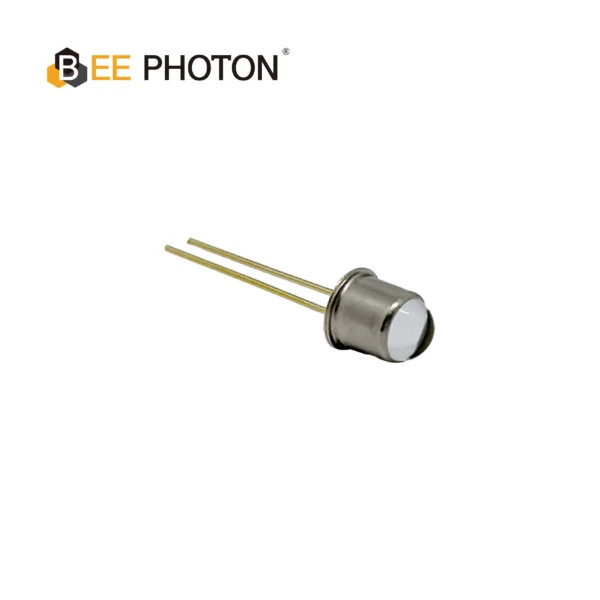
Red LED E628-10-201L4
High-Performance 625nm Red LED for Precision Optical Applications
The E628-10-201L4 by Bee Photon is a premium 625nm Red LED designed to deliver high luminosity and exceptional reliability for demanding industrial applications. Engineered with a narrow 4-degree emission angle, this high-power red LED emitter provides focused light output, making it the perfect solution for precision optical sensing and signaling tasks where accuracy is paramount.
Power Consumption vs Signal Strength: The Real Trade-off
Here’s something a lot of marketing material won’t admit: more power isn’t always better.
I’ve tested systems where increasing from 4mW to 6mW only improved signal by 12% but increased heat by 60%. In tight industrial enclosures, that extra heat can cause wavelength drift and reduced detector performance.
The 4mW radiant flux version usually gives you 85–90% of the maximum possible signal while staying in the “easy to cool” zone. That’s the part I wish more engineers understood before over-specifying their LEDs.
How to Integrate These LEDs Into Your Design
If you’re designing a new sensor, here are a few practical tips I’ve picked up:
- Drive them at 15–20mA for best efficiency
- Use a good constant current driver rather than just a resistor
- Keep the thermal path clean — even 4mW generates heat when packed tightly
- Consider adding a narrow bandpass filter matched to 465nm if you’re fighting ambient light
And if you’re not sure which configuration works best for your application, just reach out. We’ve helped dozens of companies dial this in.
Ready to Get the Right Blue LED for Your System?
Look, after testing countless blue LEDs across different power levels, I’m convinced that a well-made 4mW radiant flux 465nm blue LED emitter is the practical choice for most industrial and sensing applications.
It gives you strong, reliable signal strength without the thermal headaches and shortened lifespan that come with higher power LEDs.
If you’re currently evaluating blue light sources for your next project, I’d be happy to share our latest test data and help you pick the right emitter.
Ready to talk specs? Visit our contact page or drop us a line at info@photo-detector.com. We respond to technical inquiries fast because we know how painful delayed component decisions can be.
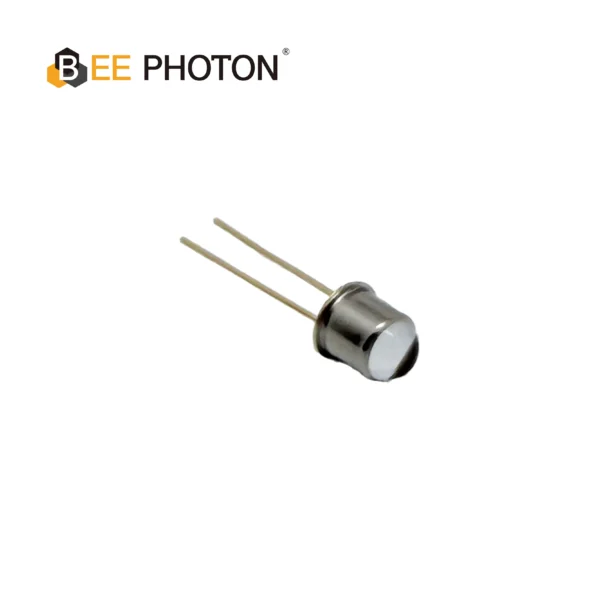
NIR LED E850-180-201L4
The E850-180-201L4 is a high-performance 850nm NIR LED engineered for precision industrial sensing. Manufactured by Bee Photon, this infrared emitter is designed to deliver high luminosity and exceptional stability, making it the ideal light source for demanding automation environments.
FAQ
Q: Is 4mW radiant flux enough for most industrial sensors?
A: In the vast majority of cases, yes. We’ve found 4mW at 465nm delivers excellent signal-to-noise in fluorescence, reflection, and transmission-based sensors while keeping power and heat manageable.
Q: What’s the difference between 450nm and 465nm blue LEDs for sensor applications?
A: 465nm typically creates less background fluorescence in many materials and matches better with common silicon detector responsivity curves. Many customers see improved contrast after switching from 450nm to 465nm.
Q: How long do these 4mW blue LED emitters typically last?
A: When driven properly at 20mA or below, our clients regularly see 50,000+ hours of stable operation. The key is good thermal design and not over-driving the LED.